
For centuries, mechanical automatons have captivated the collective imagination, marking humanity’s early steps towards robotics. These early automatons, often considered true masterpieces of ingenuity, primarily operated using systems of pulleys, gears, and levers. These creations were often meant to entertain and impress crowds at public shows or royal celebrations. A notable example is Jacques de Vaucanson’s digesting duck from the 18th century, which imitated the digestive process. Although these automatons cannot be classified as robots in the modern sense, they laid the groundwork for what would become a flourishing scientific and technological field. These pioneering inventions influenced the perception of robotics throughout history, cultivating a fascination with the possibility of bringing machines to life. They also prompted deep reflection on the relationship between humans and machines, a question that persists today. Moreover, the mechanical concepts used in these devices paved the way for future technical advancements, laying the foundations of modern robotics. Through their mere existence, they planted the idea that inanimate objects could one day not only mimic life but also assist and enhance human capabilities beyond natural limitations.
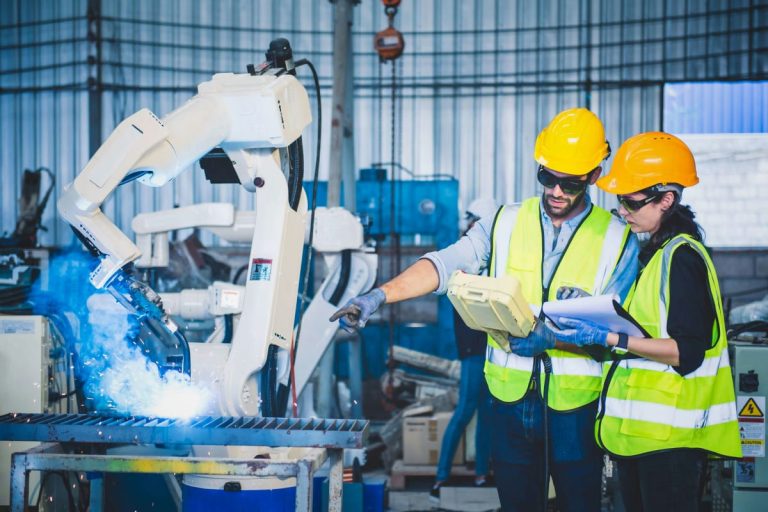
With the rise of computing in the mid-20th century, robotics underwent a decisive turning point that would redefine its potential. Computing, offering previously unimaginable computing capabilities, enabled the provision of rudimentary intelligence to machines. Robots could thus perform more complex tasks than before, processing more diverse information and making decisions based on it. This technological leap was marked by the gradual integration of computer systems into robotic machines. Inventions such as the first programmed robotic arms, used in the automotive industry, demonstrated the power of this alliance between mechanics and computing. For the first time, industrial robots could be programmed to perform repetitive tasks with increased precision and speed, thus reducing not only human workload but also error margins. These early trials paved the way for creating robots capable of executing missions autonomously in controlled environments. They proved that machines could be instructed to perform sophisticated operations with minimal human intervention, thereby increasing their economic and operational viability. The path was then open for future innovations that would further push the boundaries of automation and efficiency.
Advancements in sensor technologies and data processing have been crucial catalysts in the evolution of robotic capabilities. Sensors, whether optical, acoustic, or tactile, have enabled robots to perceive and understand their environment with ever-improving accuracy. Thanks to these devices, robots can gather a multitude of data in real-time, allowing them to adjust their actions according to external changes. Simultaneously, advanced data processing techniques have given robots the ability to quickly and efficiently process information provided by their sensors. Big data analysis and machine learning have given robots the capacity to learn from their experiences, gradually adapting their behaviors to accomplish tasks more efficiently. These innovations have transformed robots into adaptive systems that operate not only in pre-programmed contexts but also in dynamic and unpredictable environments. The improvement in precision and autonomy of robots thanks to these technologies has significantly expanded their scope of application. Whether it’s robots exploring ocean depths or autonomous drones monitoring agricultural areas, advances in sensors and data processing have enabled machines to perform complex missions with ever-increasing autonomy. With the ongoing integration of these technologies, robotics is moving ever closer to the development of truly intelligent machines capable of naturally interacting with the world around them.
In the contemporary landscape of robotics, advances in artificial intelligence (AI) have transformed the way machines interact with their environment and perform their functions. Sophisticated AI algorithms allow robots to execute tasks with flexibility and adaptability far superior to those of traditional machines. Techniques such as deep learning and natural language processing enable robots to not only understand complex instructions but also continuously learn from their environment. The impact of these innovations is visible in a wide range of modern applications. Service robots, for example, use AI to autonomously navigate public spaces, answer customer questions, and even conduct transactions. In the industrial field, intelligent robots are able to work alongside humans, adapting their actions to improve collaboration and maximize efficiency. Space research, agriculture, and even art also benefit from applications of robots with advanced artificial intelligence, expanding the possibilities of interaction between machines and humans. Humanoid robots, like those involved in care or home assistance programs, embody another major facet of AI integration in robotics. These machines not only perform tasks; they strive to interpret and respond to human emotions, promising to redefine human-machine interaction. As AI continues its rapid evolution, it pushes robotics towards an era where machines not only work for us but also share our living space in a harmonious and integrated manner.
Advances in robotics have a substantial and growing impact on our daily lives, transforming various sectors with their innovative applications. In industry, robots increase production efficiency with their ability to perform repetitive tasks with unmatched precision, reducing costs and improving product quality. In medicine, robots improve patient care with devices such as robotic surgeons, enabling more precise and less invasive interventions. In our homes, automation simplifies many household chores through vacuum robots and other smart appliances. Autonomous vehicles, although still in development, represent another potential revolution for transport and logistics, promising to transform the way we move. These innovations not only increase comfort and efficiency; they also redefine our perception of technology in everyday life. Looking to the future, advances in robotics are expected to continue reshaping our world. The challenges, particularly in terms of ethics, safety, and regulation, are numerous, but the promise of increased integration of robots into our society is undeniable. Future prospects include the development of even smarter robots capable of collaborating harmoniously with humans and the possibility of technological coevolution that could significantly improve our quality of life. As we explore these new frontiers, pursuing responsible and ethical development in the application of these transformative technologies remains crucial.