
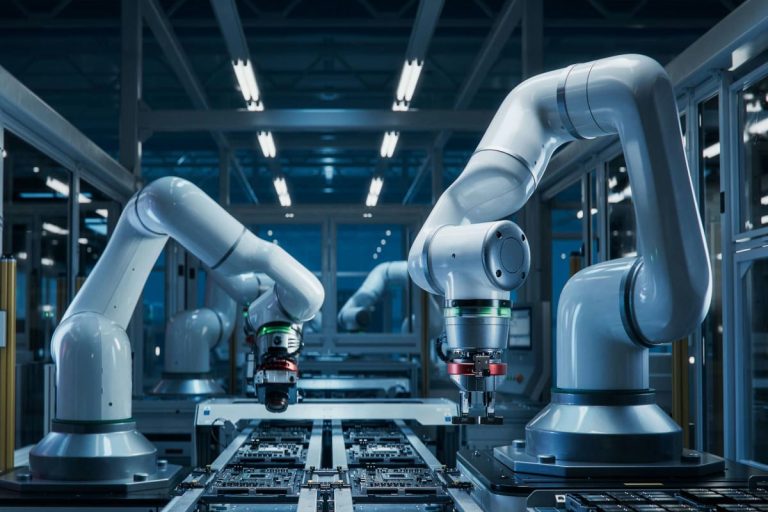
The evolution of industrial robot control systems has closely followed technological advancements and growing automation needs. In the early days of industrial robotics, control systems were basic and centered on repetitive tasks in structured environments. These systems had limited capabilities in terms of precision and adaptability. Over time, the demand for robots capable of performing more complex and varied tasks led to significant improvements. The integration of more powerful computers and sophisticated software enabled the development of more advanced control systems. These modern systems incorporate closed-loop feedback, multiple sensors, and complex algorithms to improve the accuracy and efficiency of industrial robots. One of the key milestones in this evolution was the introduction of microprocessors in the 1970s and 1980s, allowing for greater flexibility and increased computing power. More recently, the rise of collaborative robots, or cobots, has pushed control systems to new levels of sophistication. These robots must not only perform tasks precisely but also interact safely and effectively with humans in shared work environments.
Recent innovations in robot control systems have transformed the industrial landscape by making robots smarter and more adaptable. Here are some of the key technologies that have emerged in recent years. Artificial Intelligence and Machine Learning: AI and machine learning play a central role in transforming robot control systems. Robots equipped with these technologies can analyze data in real-time, learn from experiences, and adapt to various scenarios without human intervention. Deep learning techniques, such as convolutional neural networks, are used to enhance computer vision, allowing robots to recognize and manipulate objects with high precision. Reinforcement learning algorithms enable robots to optimize their actions through a series of trials and errors, resulting in behavior optimized for specific tasks. For example, on an assembly line, a robot can learn to screw more efficiently by constantly adjusting its force and precision based on previous results. Edge Computing: Edge computing is another significant innovation that reduces robots’ dependence on cloud computing infrastructures. By processing data locally at the source, robots can make real-time decisions with minimal latency. This is particularly crucial for tasks requiring rapid responsiveness, such as obstacle detection or autonomous navigation. Edge processing also makes robots more resilient to network failures, ensuring increased autonomy and improved reliability. Manufacturers can thus deploy robots in environments where stable internet connections may be challenging, such as remote production areas. Advanced Vision Systems and Sensors: Advances in vision systems and sensors have enabled robots to perceive their environment with unprecedented accuracy. High-resolution cameras, lidar systems, and tactile sensors provide rich data that robots use to navigate and manipulate objects. These technologies enable applications such as quality inspection, defect detection, and precise handling in dynamic production environments. Advanced tactile sensors, for example, allow robots to detect texture and force, essential for delicate tasks like handling sensitive electronic components. Lidar systems facilitate precise 3D mapping of the environment, enhancing autonomous navigation and obstacle detection. Precise Motion Control: Motion control remains a fundamental component of industrial robot systems. Advances in hydraulic, pneumatic, and especially electric actuator technologies have allowed significant improvements in terms of precision and power. These systems can precisely control speed, position, and force, enabling robots to perform tasks with micrometric precision. Innovations in servo-control algorithms have also played an essential role. Using techniques such as model predictive control and Kalman filters, robots can proactively anticipate and correct errors, thus reducing deviations and improving accuracy. Human-Robot Collaboration: Human-robot collaboration has opened new possibilities for robot control systems. Collaborative robots are designed to work alongside humans, sharing workspaces and complementing human skills. Advances in intuitive user interfaces and integrated safety enable more natural and secure interactions between robots and human operators. Force sensors and rapid braking mechanisms ensure that robots can immediately respond to human presence, minimizing accident risks. The goal is to facilitate smooth collaboration where robots handle repetitive or hazardous physical tasks, while humans bring cognitive and decision-making skills.
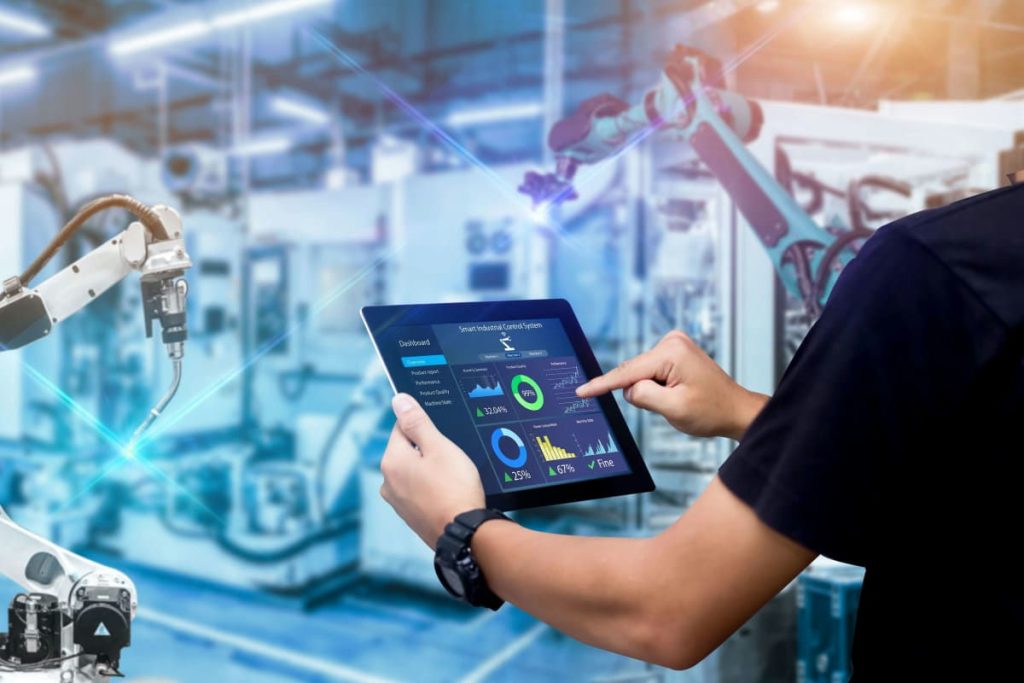
New technologies have profoundly impacted the precision of industrial robots, making manufacturing and assembly tasks more accurate and efficient. Let’s see how some of these innovations have improved precision. Vision Systems and Sensors: Enhanced vision systems and sensors have transformed robots’ perception capabilities. High-resolution cameras and lidar sensors capture detailed images and positional data, essential for precise operations. For example, in the automotive industry, robots use vision systems to weld parts with high accuracy, reducing error margins and increasing the quality of the final product. By combining computer vision with AI-based image recognition algorithms, robots can identify and correct subtle variations in components, ensuring uncompromised consistency and quality in manufactured products. Advanced Motion Control: Innovations in motion control have also contributed to increased precision in industrial robots. Modern actuators offer incredibly high precision levels, while anticipatory control algorithms allow for fine adjustments in real-time. For example, in the electronics industry, robots assembling tiny components require extreme precision, often at the micrometric level. Advances in motion control enable these tasks to be accomplished with near-perfect repeatability. The latest developments in servo-control and stepper motors have allowed robots to maintain this precision even at high speeds, thus increasing productivity without sacrificing quality. AI and Machine Learning: AI and machine learning play a crucial role in improving robot precision. Intelligent robots can analyze massive amounts of data to refine their precision over time. For example, in additive manufacturing, robots can automatically adjust parameters to compensate for material or environmental variations, thus ensuring high-precision 3D printing. Machine learning algorithms can also enhance precision by optimizing movement trajectories and reducing alignment errors. These systems use sensor feedback to continuously learn and adjust their actions in real-time, ensuring optimal performance under various operating conditions.
Reliability is a major concern in industrial environments where downtime can lead to high costs. New technologies have improved the reliability of industrial robots in several ways. Edge Computing: The introduction of edge computing has enabled robots to process data locally, thus increasing their autonomy and responsiveness. By reducing dependence on cloud resources, robots can continue to operate even in the event of network connectivity failures. This ensures increased reliability, especially in remote or high-latency environments. Edge computing-based systems are also less likely to encounter delays in data processing, which is crucial for real-time decision-making applications such as assembly lines or automated warehouses. Advanced Sensors and Feedback Loops: Advanced sensors and closed-loop feedback systems have also improved robot reliability. By continuously monitoring operating conditions and adjusting parameters accordingly, these systems can prevent errors before they occur. For example, force sensors can detect excessive resistance during a screwing operation and adjust the applied force before the component is damaged. Innovations in intelligent sensors and embedded diagnostics also enable predictive maintenance. Robots can monitor their own status and alert when a component is approaching its end of life or needs intervention, thus reducing the risk of unexpected breakdowns. Adaptive and Self-Correcting Algorithms: Advances in AI and machine learning have enabled the development of adaptive and self-correcting algorithms that enhance operational reliability. These systems can learn from historical data and past experiences to anticipate and correct errors. For example, in a variable production environment, a robot can automatically adjust its parameters to maintain consistent performance, even when working conditions change. Self-correction systems can also manage external disturbances, such as temperature variations or vibrations, by adjusting their behavior to minimize impact on ongoing operations.
Looking ahead, industrial robot control systems will continue to evolve to meet the growing needs for precision, reliability, and flexibility. Integration of Generative AI: One of the most exciting prospects is the integration of generative AI, which can autonomously design and optimize tasks for robots. These systems could enable robots to generate new solutions and work strategies, improving their adaptability to complex and unstructured tasks. However, this also raises challenges in terms of verification and validation of the generated solutions, requiring robust safety and performance standards. Safety and Ethics: Human-robot collaboration presents opportunities and challenges in terms of safety and ethics. As robots become more common in work environments, rigorous safety protocols must be developed to ensure safe interactions. Moreover, ethical issues related to automation and its impact on human employment will need to be addressed, requiring clear regulatory frameworks and responsible adoption practices. Autonomous Robots: Autonomous robots, capable of making complex decisions without human intervention, also represent a promising avenue. However, these systems will require robust decision-making algorithms and advanced data processing capabilities to operate reliably in varied environments. Challenges include managing uncertainty and disruptions, as well as integrating real-time data from various sources. Sustainability and Energy: Sustainability is another crucial aspect. Future control systems will need to be energy-efficient and use recyclable materials to minimize the environmental impact of industrial robots. Additionally, balancing performance and energy consumption will be a major challenge, requiring innovations in energy management and battery technologies. Conclusion: Innovations in robot control systems have had a significant impact on the accuracy and reliability of industrial robots. Thanks to advances in artificial intelligence, edge computing, vision systems, and sensors, as well as improvements in motion control and human-robot collaboration, industrial robots have become more precise, reliable, and adaptable. Looking to the future, new technologies and approaches promise to continue transforming the industrial landscape, showing an exciting future for industrial robotics. These evolutions will also pose new challenges, such as safety, ethics, and sustainability. However, with ongoing innovation and responsible adoption, robot control systems will continue to play a crucial role in modern industry.