
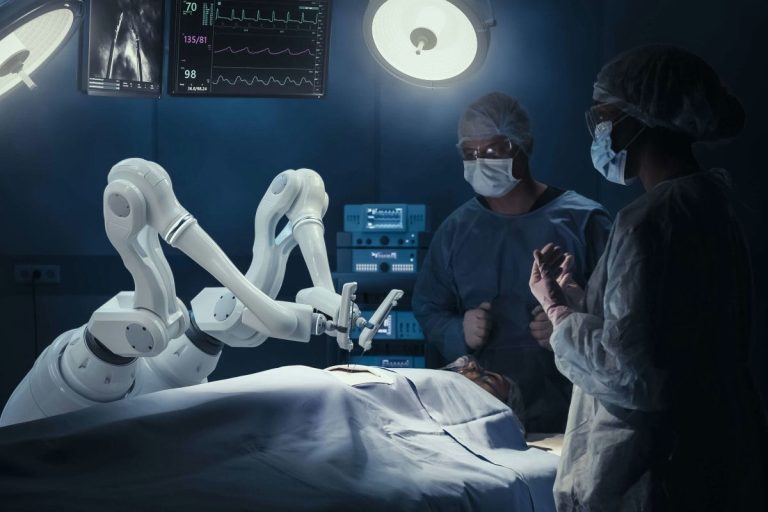
Medical robotics, today synonymous with technological progress in healthcare, has come a long way from its humble beginnings. In the 1980s, the first attempts at mechanizing surgical processes emerged with simple robotic devices designed to assist surgeons. The initial idea was to reduce manual tremors and improve movement precision. The year 1985 marked a critical turning point with the introduction of the PUMA 560, an industrial robot adapted for stereotactic brain biopsies. The 1990s saw the emergence of the PROBOT robot for prostate surgery at Guy’s Hospital, and the ROBODOC for orthopedics, contributing to more precise hip prosthesis implants. These innovations illustrated the potential of robotics to improve the accuracy and efficiency of procedures. In 2000, the FDA’s approval of the Da Vinci system definitively revolutionized the field. This device incorporated advanced control and imaging techniques, allowing for minimally invasive procedures with unparalleled dexterity and precision. These historical advances were made possible through a synergy between engineers, researchers, and healthcare professionals, each bringing their specialized expertise. Medical robotics was no longer limited to surgical applications, but also extended to other domains such as rehabilitation and daily care assistance. Indeed, robotics found its place in almost every aspect of healthcare, from medical imaging to post-operative patient rehabilitation. The continued evolution of medical robotics is based on constant innovation and substantial investments in R&D. Today’s robotics integrate technologies like Artificial Intelligence (AI), machine learning, and 5G connectivity for even more diverse and sophisticated applications. The trajectory of this technology foreshadows a future where even smarter and more versatile robots will populate operating rooms and improve patient care.
Modern medical robots come with a range of sophisticated features that make them indispensable tools in hospitals and clinics worldwide. Leading the list is the famous Da Vinci robot, developed by Intuitive Surgical, likely the most widespread and appreciated surgical robotic system. Equipped with four robotic arms and high-definition 3D vision, Da Vinci allows precise manipulation of surgical instruments and offers surgeons a clear visualization of the operation area. Its technology enables complex interventions such as cardiac, urological, and gynecological surgeries with minimal incisions. The ROSA (Robotic Surgical Assistant) system, developed by Zimmer Biomet, is another remarkable example. ROSA is specifically designed for orthopedic and neurological surgeries. It facilitates surgery planning, assists during the operation, and allows real-time adjustments for more precise implant placements, thus reducing postoperative complications. ROSA’s precision is particularly beneficial in complex procedures like neurosurgery, where even a minimal margin of error can have serious consequences. The Mako Robot, developed by Stryker Corporation, also stands out in orthopedics. Primarily used for knee and hip replacements, Mako allows precise bone cuts and minimizes tissue trauma. This robot also integrates three-dimensional preoperative imaging to accurately plan implant placements, improving postoperative outcomes and reducing patient recovery time. The introduction of artificial intelligence in medical robotics has also led to the creation of smart robots capable of performing diagnostic and caregiving tasks. For example, the Watson robot developed by IBM is used for diagnosis and treatment recommendations in oncology. Watson analyzes thousands of clinical cases and medical publications to provide data-driven recommendations, helping doctors make more informed decisions. Finally, the market is seeing the emergence of robots focused on rehabilitation and daily care assistance. The ReWalk robot, for example, enables paraplegic patients to walk again using a robotic exoskeleton. These robots not only assist surgeons but also contribute to the physical rehabilitation of patients, providing continuous monitoring and targeted rehabilitation exercises. These medical robots, each with its specific functionalities, illustrate the deep integration of technology in healthcare. They offer not only more precise and effective solutions to healthcare professionals but also better experiences and outcomes for patients.
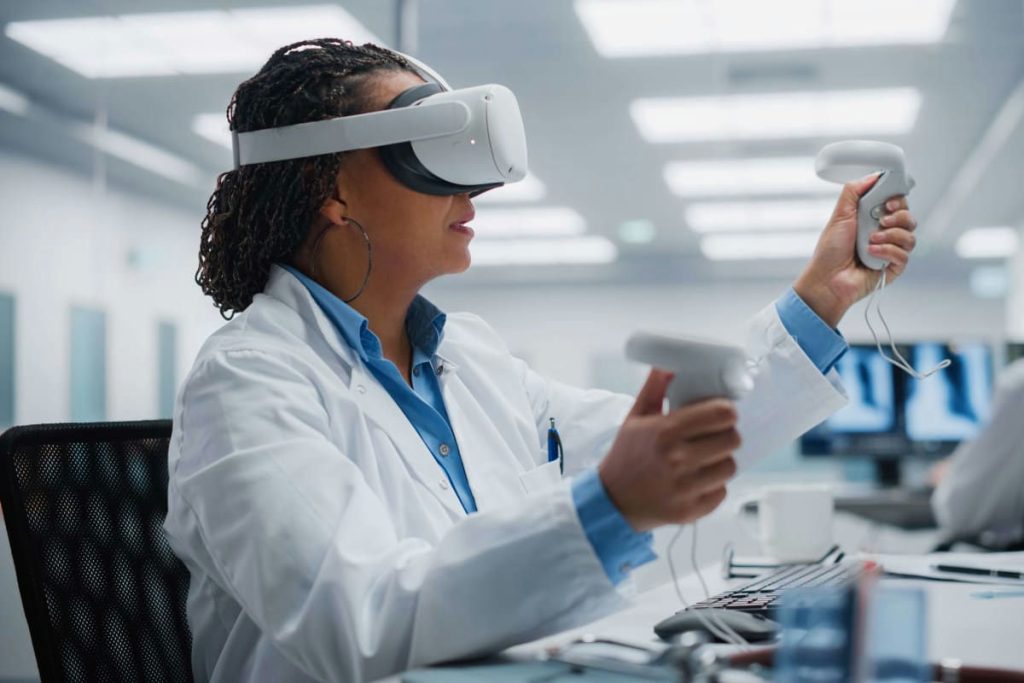
Robotic systems in surgery present several significant advantages, ranging from increased precision to reduced recovery times. One of the primary benefits lies in the surgical precision offered by these technologies. Robotic arms, like those used by the Da Vinci system, can perform minute and precise movements, far beyond human capabilities. This precision reduces the risk of collateral damage to neighboring tissues, thereby minimizing postoperative complications and improving patient outcomes. Another major improvement brought by surgical robotics is the reduction of human errors. Hand tremors, for example, can be completely eliminated, which is particularly beneficial in interventions requiring extreme dexterity and stability, such as neurological and cardiac surgeries. Robots can also perform repetitive tasks with a consistency that humans cannot match, ensuring precision and safety throughout the intervention. Minimally invasive procedures are another category where surgical robots excel. With smaller incisions, patients experience less tissue trauma, resulting in reduced postoperative pain and shorter recovery times. By opting for minimally invasive techniques facilitated by robotics, the risk of infections is also decreased, which is a significant advantage in a hospital setting. Artificial Intelligence (AI) and machine learning are beginning to play a crucial role in surgical robotics. AI can analyze vast amounts of data to provide relevant suggestions in real-time, helping surgeons make better-informed decisions. Moreover, machine learning algorithms enable robotic systems to improve over time by learning from past experiences, increasing their efficiency and precision. Furthermore, telemedicine and telesurgery greatly benefit from advancements in robotics. Surgeons can now perform operations remotely, offering specialized care in remote or underserved regions. This capability is particularly beneficial in emergency situations, where an expert can intervene immediately without the usual geographical constraints. 5G connectivity, with its low latency, promises to make these remote operations even more effective and reliable. Despite these advantages, it is important to consider the challenges such as the high cost of these technologies and the training required to use them effectively. However, the potential benefits in terms of precision, safety, and patient satisfaction are undeniable. Surgical robots are not intended to replace surgeons but to augment their capabilities, making procedures safer and more efficient. Innovations in surgical robotics represent a significant advancement in the field of medicine, promising to transform healthcare by offering unprecedented precision, safety, and optimized recovery for patients. By continuing to invest in these technologies and ensuring adequate training for healthcare professionals, we can envision a future where the benefits of robotic surgery will be accessible to an increasing number of patients worldwide.
Medical robots have a profound and multifaceted impact on healthcare, transforming not only how surgeries are performed but also altering the dynamics of healthcare as a whole. One of the most notable impacts is the elevation of care standards. Robot-assisted surgical interventions offer increased precision and safety, minimizing the risks of complications and improving patient outcomes. This improvement in care quality leads to reduced readmission rates and increased overall patient satisfaction. Another crucial aspect of medical robots is their potential to overcome geographical challenges and disparities in healthcare access. Telesurgery allows expert surgeons to perform operations remotely, offering specialized care in isolated or underserved regions. This capability is particularly beneficial in developing countries or rural areas where access to highly qualified surgeons may be limited. Advanced connectivity, such as 5G, makes these remote operations increasingly reliable and viable, contributing to a more equitable distribution of healthcare. Innovations in robotics have also led to significant long-term cost reductions. Although the initial cost of robotic systems and their maintenance can be high, the savings from reduced postoperative complications, hospital stays, and readmissions often offset these costs in the long run. Moreover, faster recovery times allow patients to return to their daily activities more quickly, reducing the economic burden associated with prolonged work stoppages and extended care. In terms of education and training, medical robots offer new opportunities for training surgeons and other healthcare professionals. Robotic simulators allow surgeons to acquire and perfect their skills in a risk-free environment before performing actual interventions. This is particularly beneficial for young surgeons or those in training, who can repeat complex procedures until achieving a certain mastery. The integration of artificial intelligence and machine learning in medical robots also has a transformative effect. AI enables real-time analysis of patient data, providing crucial information for decision-making and thus improving the precision and efficiency of interventions. In the long term, this could also lead to increased personalization of care, where surgical interventions and treatments would be tailored to the specific needs of each patient, based on detailed data and predictive analysis. However, despite these advantages, it is essential to recognize the challenges that accompany the adoption of robotic technologies. Apart from the initial cost, the need for specialized and continuous training for healthcare professionals remains a major obstacle. Additionally, it is essential to maintain a balance between the use of technology and the preservation of traditional surgical skills to ensure practitioners’ versatility and complete competence. In summary, medical robots have a significant and positive impact on global healthcare, improving care quality, increasing accessibility, and reducing long-term costs. However, to maximize these benefits, a balanced and well-planned approach is necessary, including investments in training and technological infrastructure.
Looking to the future, the field of medical robotics appears promising, with technological advances that could further revolutionize healthcare. One of the most exciting prospects is the partial or complete automation of surgical procedures. With the continued integration of artificial intelligence and machine learning, future robotic systems could perform surgical interventions with little or no human supervision, executing repetitive and precise tasks with unmatched efficiency. Nanorobots represent another fascinating avenue for future innovation. These tiny devices could navigate the human body to perform medical tasks at a microscopic scale, such as removing arterial plaques or delivering drugs to targeted areas. Nanorobots could offer less invasive and more precise treatments, opening the door to previously unimaginable applications. 5G connectivity is also likely to drastically improve telesurgery, allowing remote operations with minimal latency. This not only improves real-time coordination but also provides greater flexibility and access to specialized healthcare. Surgeons will be able to collaborate and intervene in complex cases worldwide in real-time, without the unpredictable limitations of current technology. However, these advances come with significant challenges. Training surgeons and other healthcare professionals remains a major challenge. Robotic systems require not only extensive training for their use but also continuous skill updates to keep pace with new technologies. Increased dependence on technology also raises ethical and practical questions, including the potential loss of traditional surgical skills. Surgeons must maintain a balance between their traditional skills and technology mastery to ensure optimal care. The ethical implications of automation also deserve thorough consideration. As robotic systems become more autonomous, the question of responsibility in case of malfunctions or errors becomes crucial. Who is responsible if a robot makes a mistake during an operation? Is it the manufacturer, the programmer, or the surgeon? Regulations and ethical frameworks will need to evolve to address these new realities. Finally, cost remains a major obstacle to the widespread adoption of robotic technologies. Although the long-term benefits may justify the initial investment, the high costs of purchase, maintenance, and training can limit the accessibility of these technologies, particularly in developing regions or small healthcare practices. Efforts must be made to make these technologies more affordable and accessible to a wider range of healthcare institutions. Despite these challenges, the future prospects of medical robotics are extremely promising. Technological advances offer unprecedented opportunities to improve healthcare, with robots capable of performing surgical tasks with unmatched precision and efficiency. However, to fully realize these potentialities, the healthcare and technology sectors will need to collaborate closely, overcoming financial, technological, and ethical barriers. A balanced and thoughtful adoption of these technologies could transform the way healthcare is delivered, offering considerable benefits to patients worldwide.